
Sales Coaching: The Complete Guide for Sales Leaders
Updated for 2025-2026 | By Richard Harris, Founder of The Harris Consulting Group | Author of The Seller’s Journey
What You Will Learn
- Why most sales coaching doesn’t work, and the specific reasons it fails
- The real differences between sales coaching and sales management
- A strong sales coaching framework any manager can implement
- Running effective 1:1s focusing on sales skills, not just reviewing the pipeline
- The sales coaching skills that separate great sales managers from the mundane
- How to build a sales coaching culture in your sales organization
- A sales coaching FAQ you will want to keep
Sales Coaching Done Right: Most Teams Are Managed, None Are Coached
You cannot manage people, you can only lead them and coach them. If they don’t have their own internal drive then you have an accountability issue, not a sales coaching issue. Those things ‘check the box’ that sales leadership wants to see. Unfortunately many executive sales leaders, and founders are misinformed about what’s really important.
There are two primary types of front line sales managers and leaders:
1. The Dashboard and Data Sales Manager. This sales leader is metrics driven, loves sitting behind a dashboard and giving commands like they are the Captain Picard of the Enterprise. They lead with numbers first, not humanity. They call them 1:1s but in reality they are just pipeline reviews. They pay little attention to the actual growth of their sales team members unless it’s about their revenue growth. Their primary focus of sales coaching is about inputs and outputs. Not the skills utilized to actually affect those inputs and outputs. And occasionally they will do some call reviews that are basic feedback on what someone ‘should be doing’ and not engage with the rep to actually help coach up a skill that needs particular focus. Their ego thinks that being the Sales Handywoman or Mr. Fix-It is actually developing skills. In reality it’s developing a co-dependency relationship. They have often not been in the sales trenches recently, and let their ego drive their leadership style. Sales coaching is not a priority because they think sales people should just ‘know how to do the job.’
2. Lead From the Front Sales Manager. These are the sales managers and sales leaders that employees remember forever. They are the sales leaders that when they leave, their entire team wants to go with them. This is the sales manager or sales leader who likes getting their hands dirty. They understand that metrics matter in terms of giving some direction and that there is more to the metrics than just the numbers they represent. They make sure they know the different types of 1:1s from sales skills development and coaching to life skills development, and leadership development. They even know a non-business related 1:1 brings value and loyalty. And most importantly, they have regular coaching sessions with their sales teams. Whether it’s call review, role playing, or sales training for the entire team, they understand that improving the input skills has a direct correlation and causation to the outputs achieved.
So how do we break this down? It’s not as hard as we think it is, and in many cases people already know this is the best practice; they simply have a hard time getting out of their own way to actually execute.
Sales leaders are better off thinking about revenue growth based on the following:
- Developing the individual skills of their reps
- Making this deliberate and consistent
- Documenting where they are, where they need to be, and specifically stating the gap
- Creating a list of 3 items they should focus on
- Training and coaching only one at a time
This is the gap seen consistently across all sales teams. And even on the best teams, these gaps still exist. Nobody is above learning more.
The distinction between managing and coaching is not semantic. Sales management is defined by focusing on capacity, the sales process and directing work flows, and tracking outcomes. Sales coaching is about developing capability at the individual and the team level. Both are necessary.
And the one that actually moves the needle on long-term performance is sales coaching, and it’s the one that gets deprioritized almost every week, on almost every team, in almost every company.
An example of this is forcing managers to manage 10-12 reps not 6-8 because somebody doesn’t want to pay another salary. Another example is executive leadership thinking manual processes like dialing, finding contact information, and updating the CRM system all in the interest of ‘saving money.’ Just remind your sales leaders that leaving money in the bank does not actually help the company grow.
This guide is for sales leaders, managers, directors, VPs of Sales, and CROs who are serious about building sales teams that don’t just hit a number this quarter. If that sounds like you, explore our Sales Management and Leadership Training to see how we build this capability from the ground up.
Sales Management vs. Sales Coaching: Why the Difference Matters
The confusion between coaching and managing is one of the most expensive errors made by founders, executive leadership, and yes, even sales leadership. When managers conflate the two, they end up doing neither well. And it all rolls downhill to the sales reps.
| Sales Management | Sales Coaching |
|---|---|
| Directs day-to-day activity | Develops individual skills |
| Tracks KPIs and pipeline | Identifies root causes of performance gaps |
| Sets quotas and targets | Builds rep confidence and capability |
| Resolves immediate problems | Asks questions instead of giving answers |
| Evaluates current performance | Invests in future performance |
| Runs forecasting calls | Creates safe space for growth |
| Administers the sales process | Builds the coaching relationship over time |
| Provides ideation of sales strategies |
Great sales leaders do both because they know the difference. You understand your most valuable commodity is their time, and you protect time for coaching the same way you protect time for forecasting. You are relentless about time management. You control your calendar, you do not let your calendar control you. Without coaching, your forecast is just a guess built on a team that’s as good as it was last quarter and smoking a whole lot of hope-i-um.
Why Most Sales Coaching Programs Fail Sales Managers
Let’s name the problems before we talk about solutions. In my work training sales managers and leaders across hundreds of organizations, I see the same patterns over and over:
Problem 1: Sales Coaching Is Reactive, Not Proactive
Most coaching happens after bad things happen. A deal falls apart, a rep misses their number, a call recording surfaces a problem. And worst of all, no planning for training and skills coaching through the whole year. None of this is coaching, it’s simply reactive corrections. And worst of all it’s driven by ego based on their own panic and self-job preservation.
Real coaching happens before the problem, not in response to it. It’s a part of your sales forecast, it’s preventive, it’s developmental, it’s called ‘ever-boarding’, and it’s customized developmental activities at both the sales rep and sales team levels.
Problem 2: Sales Managers Tell Instead of Ask
These leaders ‘should on you.’ Don’t ever let someone ‘should on you.’ When a rep describes a problem and the manager says ‘here’s what you should do,’ that’s controlled manipulation and problem solving, not sales coaching. The rep doesn’t develop their own critical thinking, their capabilities, they just follow instructions. The next time they face a similar problem, they’ll ask the manager again instead of thinking through it themselves. Good coaches ask questions that help reps develop their own insight.
Problem 3: Sales Coaching Has No Structure
‘It will happen when it needs to happen.’ If this is your mindset as a sales leader you should not be a sales leader at all. Effective coaching is scheduled, consistent, and structured. It has a clear relevancy and a clear purpose. It has a defined format with specific expectations and desired outcomes, and it is documented. Improvised coaching is better than no coaching, but it’s nowhere near as effective as a deliberate, repeatable process.
Problem 4: Sales Managers Don’t Know What to Coach
Most sales managers and sales leaders were promoted because they were great individual contributors, could follow a process, knew their numbers, and maybe they helped with some interviewing and early on-boarding. Nowhere in this list is anything about their ability to manage and navigate the human element with soft skills. In reality, the soft-skills are the hard skills. Without that diagnostic capability, coaching becomes generic, and generic coaching doesn’t move the needle for any specific rep.
Problem 5: No Follow-Through
A sales coaching conversation without documented commitments and follow-through is really just a conversation, not sales coaching. Real behavioral change requires repetition, accountability, and reinforcement. If the only time a rep hears about a skill is in a 30-minute 1:1, they won’t change. You have to close the loop, which means assigning responsibilities in both directions, defining what it means to be accountable, regular check-ins, making adjustments, and celebrating progress. If you do not provide positive feedback on successes, then all your rep will hear is critical parenting.
A Sales Coaching Framework That Works: PREP-OTC for Sales Managers
At The Harris Consulting Group, we teach a simple coaching framework that managers can use consistently: PREP-OTC. It stands for: Prepare, Reality Check, Explore, Plan, Observe, Transfer, Celebrate.
P, Prepare: Know What You’re Walking In to Coach
Prepare with the end in sight. No successful leader ever just wings it. Before any coaching session, review the rep’s recent activity, performance data, and call recordings. Identify one to two specific behaviors or skills you want to develop based on the outcome of this conversation.
Then go deeper. If you say ‘discovery’ define what type of discovery. Is it a first call discovery? Is it during a demo? Is it during commercial conversations? Yes, there is an element of discovery during commercial conversations.
Don’t go into a coaching conversation with a vague sense that ‘things could be better.’ Be precise. ‘In your last three discovery calls, you moved to the demo 10 minutes in without asking about economic impact.’ That’s coachable. ‘Your discovery needs work’ is not. And when you share economic impact, ask them to workshop the conversation with you. Mini role play and real play conversations are the glue to making the sales coaching stick.
R, Reality Check: Start With Their Perspective
Before your conversation share the specifics of what you would like to cover with them. Highlight the calls and deals you are pulling this from and give them time to review. Get specific on the topics you want to review and that you will be asking for their feedback to start, not just you pontificating.
Something like: ‘When we catch up I want to discuss ___ and here’s what I am noticing. I want to hear how you feel about this topic and see if we can work on it together.’
Your 1:1 and sales coaching sessions should never feel like a ‘gotcha.’ Reps will already be on the defensive so it is incumbent upon you to reduce that anxiety for them and let them know it’s about improving their skills and their paycheck and they are not in any kind of trouble.
All of this serves three purposes: it tells you whether they have accurate self-awareness, it ensures the rep is mentally engaged rather than just receiving feedback, and reps who can self-diagnose their own problems are far more likely to fix them.
E, Explore: Ask Questions, Don’t Give Answers
Actually one of the easiest parts of management but it is the least exercised muscle when managing humans. In sales, exploring, also called discovery, is crucial. This is a cross-over skill when managing others. Instead of solving the problem for them, it’s critical you teach them to explore solutions beside them. You ask the exploratory questions to the issue at hand and it teaches them to be better at self-assessment and self-accountability.
Resist the urge to say ‘here’s what you should do.’ Instead, ask questions like:
- ‘When you’re in that moment in the call, what’s going through your mind?’
- ‘What do you think would happen if you asked that economic impact question earlier?’
- ‘What would you do differently if you ran that call again?’
Questions build awareness. Directives build dependency.
P, Plan: Commit to Something Specific
Every coaching conversation should end with one specific, concrete commitment based on what you defined under the prepare section. This is also the beginning of accountability for both parties.
You want your sales rep to define their outcomes. It cannot simply be ‘I’ll work on my discovery in future sales calls,’ that’s meaningless. A better definition would be: ‘In my next three discovery calls, I’m going to ask the cost-of-inaction question before we get to the demo.’
Then you have them write it down. Yes, old school, write it down, not take a note on their device or computer. Humans remember things better after they write something down. Date it. Both of you sign off on it. That’s a coaching commitment. When you commit to them, they will commit to you.
Want PREP-OTC installed in your managers’ actual 1:1s — not just bookmarked?
Schedule a free sales training assessment.
O, Observe: See It in Action
You can’t coach from behind a monitor. The best sales leaders act and lead with intent on helping their sales team members. This includes listening to recordings, live call coaching with the rep’s permission, and shadowing them in a customer meeting.
A great sales leader needs to observe the specific behavior you’re coaching before you can assess whether it’s changing. And when you observe it improving, say so, specifically, immediately. Instant feedback helps assure a sales rep will want to repeat what they’ve done and therefore continue to exercise the new muscles.
T, Transfer: Create Independence, Not Dependence
Ultimately a strong sales leader wants to develop a self-reliant sales person through sales coaching. The goal of sales coaching is for the rep to internalize the skill so they no longer need your direction. Or at least need less direction over time so other skills can be developed. A rep who, six months later, is still coming to you with the same problems means the coaching didn’t transfer. That’s not a rep problem, that’s a coaching method problem.
C, Celebrate: Assures Reinforcement
Celebrating the little wins are as important as celebrating the big ones. Every closed sale is based upon a lot of little things done right. It’s these little things that you have been coaching on. When you hear them make one of the little changes you suggested, or ask that deeper discovery question, call that a win and let them know. No matter what anyone says, every human being wants to be seen, heard, and understood. Celebrating these wins incorporates all three.
How to Run a Coaching-Focused 1:1
So often the 1:1 is simply thought of as a task that needs to be completed. Something that is merely done to ‘check the box.’ If this is your approach, then you are part of the problem, not a solution.
The best sales leaders know the true value of one on ones, which are to:
- Improve Relationships
- Improve Performance
- Support Accountability
- Drive Recruitment
- Drive Retention
- Build TRUST
The 1:1 is the most underutilized tool in sales management. In most organizations it becomes a pipeline review, the manager asks ‘what’s going on with this deal,’ the rep summarizes, and they move to the next one. That’s not a 1:1. That’s a status update. In reality there are several types of 1:1s:
- Skills Review and Coaching
- The Week Ahead
- Career Conversations
- Life Conversations
- Feedback to Manager
No, you cannot do all of these in a single session. Recognize some 1:1s are more important than others. Recognize each type of 1:1 needs to happen. Define a schedule of 1:1s so both you and the sales reps come prepared.
For example, you could break your quarter down across 13 weeks: 5 Skills Reviews, 2 Weeks Ahead, 2 Career Conversations, 2 Life Conversations, and 2 Feedback to Manager conversations.
First 5 Minutes: Personal Check-In
How is the person doing personally? Not the pipeline, the person. Sales is a mentally demanding job. Starting with the human, not the numbers, builds trust and gives you information about the rep’s mental state that affects everything else in the conversation.
Next 10 Minutes: Their Topics
What does the rep want to discuss? What skills would they like to work on based on where they feel their pipeline is stuck? Why do they think that’s the right skill? What ideas do they have around improving the skill? This signals that the 1:1 is their time, not a reporting mechanism. Reps who feel the 1:1 exists for them will actually prepare for it.
Next 10 Minutes: Coaching Topic
This is the one thing you came in to coach. Based on your preparation, bring one specific observation. Use the PREP-OTC framework here. Ask, explore, plan.
Last 5 Minutes: Commitments and Appreciation
This is where you assign accountability for both of you. Confirm the one commitment each of you are making based on this conversation. Confirm what success will look like. Write it down. Be sure to include something you have seen the rep is doing well. Reps who only hear what they’re doing wrong start to believe that’s all there is.
Pro Tip: Keep a coaching log, even a simple doc, for each rep. Document the skill you coached, the commitment they made, and whether they followed through. This turns coaching from a conversation into a development program. Over six months, you’ll be able to show a rep exactly how far they’ve come.
Coaching Different Rep Profiles
No two humans are exactly the same, and no two sales reps are exactly the same. One of the most common mistakes in sales leadership and sales coaching is applying the same approach to every rep. Great sales managers know how to coach the individual based on their unique desires and motivators.
The New Rep (0-6 Months)
Newbies need a bit more structure in the beginning, even reps with lots of sales experience may need some additional help when first getting started. Each needs a different level of structure, clarity, and frequent check-ins. They don’t know what they don’t know. Over-coach the fundamentals: discovery, objection handling, how to describe your product in the customer’s language, qualification based on their unique skill set. Build their confidence with specific, genuine praise when they execute well.
The Developing Rep (6-18 Months)
They now know the basics and are developing judgment and improving upon self-awareness. Your job here is to up-skill them. Expand their mindset. They probably need more sophisticated discovery, deal strategy, multi-threading, negotiation. Push them toward independence. Ask more questions and give fewer answers. Celebrate when they solve their own problems.
The Veteran Rep (18+ Months)
This is where we see sales managers falling into a trap. We believe these veterans no longer need or want coaching. In some cases they will even tell you they don’t need or want more coaching. Most veterans need a new and different type of challenge. They often need help with consistency, applying their skills every single call instead of coasting on past success. And one of the biggest issues is they try to short-cut something in their sales process. Make sure this is not happening. It’s usually the sign of a slump.
The Struggling Rep
Is it skill? Is it will? Is it life? This is where sales coaching gets hardest. Remember, the soft skills are the hard skills. A skill issue means more coaching, more practice, more observation, more feedback. A will issue is a management conversation about expectations, consequences, and support. Mixing up these two responses is how you keep struggling reps too long and lose great managers to burnout.
How to Build a Sales Coaching Culture Your Team Believes In
Having strong individual coaching conversations matter. Having a strong team culture matters just as much. A great sales team coaching culture, where development is expected, mentoring is normal, learning is celebrated, and vulnerability is safe is worth everything. It makes everything easier, from recruiting and retaining, to building trust, to achieving revenue targets.
Here’s what I’ve seen in the best sales cultures I’ve worked with:
The Sales Stack
If you do not have the right sales stack for your sales organization it’s time to find a new place and leadership team who gets it. The following are table stakes in 2026:
- Accurate Prospecting Data
- Call Recording and Reporting
- Video Call / Zoom Recording
- Auto Populate the CRM
- A CRM (yes, still worth saying)
- Sequence / Cadence Tools
- Asynchronous Communication Platforms
- Sales Navigator
- AI Tools to Analyze and Make Recommendations
Leadership Models the Behavior
It all rolls downhill. If the VP of Sales isn’t being vulnerable and actively learning and openly talking about sales skills improvements, then why should the sales team? Leaders who talk about their own development, who share their mistakes, who celebrate a manager’s coaching improvement as much as a revenue milestone, those leaders build teams that develop. Nobody wants to hear your war stories of success. They probably will appreciate your stories of failure and what you learned from them.
Coaching Is Inspected
If you aren’t measuring it, you cannot coach it. Build manager 1:1s into your cadence. Review coaching logs quarterly. An executive leader needs to ask sales managers what they coached last week the same way you ask reps what deals they’re working.
Feedback and Mentoring Is Normalized
Feedback is transactional. Mentoring is a lifetime. People want to be mentored more than they want feedback. A great sales coaching culture has mentoring happen not just to people but for each other. Build peer feedback, group call reviews, and shared learning into your team rhythms. When feedback becomes part of the air that includes mentoring rather than a special event, people stop being defensive and start being genuinely curious about how they can get better.
Failure Is a Learning Event
Do not sweep this under the rug. Sales is a place where failure happens on a regular basis. A strong sales coaching culture treats failure as data, not verdict. ‘What’s the one thing you could have done better on that deal?’ is the single best question to ask a rep. They will find many more than one thing, and that’s good. Start with one, and see where it takes you.
Business Case for Sales Coaching: What It Costs When You Skip It
Let’s make the business case, because you’re going to need it when you’re asking your CFO or CEO to invest in a sales training, reinforcement, or sales coaching program.
Nobody is simply good at their job because they have a title. That includes any founder, CEO, CFO, CRO, CMO, or anything else. They all had to develop their skills over time. It took time, experience, mistakes, and mentors.
The research is consistent: companies with structured coaching programs significantly outperform those without. Recruitment is easier. Ramping new reps is shorter. Attrition is lower. Sales cycles shorten, win rates are higher, deal sizes trend larger because reps who are well-coached do better discovery, which leads to more quantified opportunities that are harder to discount.
A single bad hire simply from the cost side costs you 6-12 months in salary, and it compounds by 3x on any expected deals you were hoping they would close. It’s not the lost revenue of the first deal, it’s the renewal and upsell revenue on the future deals.
A manager who coaches effectively reduces attrition and improves performance simultaneously. If you’re evaluating what great looks like, our Consultative Sales Training page covers what that investment produces in practice.
The question isn’t whether to invest in sales coaching. The question is whether you have a system for doing it consistently, or whether you’re leaving it to chance and hoping your managers figure it out on their own.
Frequently Asked Questions About Sales Coaching
How is sales coaching different from sales training?
Sales training is an event that introduces skills and frameworks in a concentrated setting. In contrast, sales coaching is a process that reinforces, applies, and develops those skills over time through individual attention, feedback, and practice. Both are necessary because coaching is ultimately what makes training stick.
How much time should a sales manager spend on coaching?
High-performing sales managers typically spend at least 30-40% of their working time on development activities, including 1:1s, call reviews, ride-alongs, and skill practice. You must be ruthless in managing your calendar so your calendar does not manage you.
What should you coach first?
Part of the answer is defined by which type of sales rep you are coaching. Is it a newbie or a veteran? Generally speaking the best practice is to start with the activities that will have the most immediate impact on revenue. This does not mean start a newbie with negotiation and closing training. It means start at the beginning so you can get to that part of the training sooner and reduce early stage mistakes.
Can you coach remotely?
It’s 2026. If your organization does not have the tools needed to coach remotely then it’s time to find a new organization. Call recordings, videos, 1:1s, Slack, Zoom, all of these items are table stakes when it comes to building a coaching culture.
What if a rep is resistant to coaching?
Expect and plan for this. Especially with veteran reps who interpret coaching as criticism or micro-management. The solution is to separate coaching from performance evaluation explicitly. ‘I’m not here to judge how you’re doing. I’m here to help you get better at something specific.’ Keep the conversation focused, non-threatening, and specific. Resistance often dissolves when the rep realizes you’re genuinely invested in their development rather than building a case against them.
How do you measure whether coaching is working?
Track the specific skill you coached over a defined time period, typically no longer than 4 weeks. This timeline will be based upon your sales cycle. If you run a transactional sales team this can be done in hours or days. Larger deal cycles may take longer. Try to define metrics around what you’ve been coaching. Are talk ratios improving on calls? Are there fewer bad deals getting in the pipeline? Of the new deals in the pipeline, how much better qualified are they?
How do you coach a rep who is consistently hitting quota but has skill gaps?
Many think you do nothing. What’s better is to ask them what’s going so well. Remember, quota attainment at 100% can mask problems that aren’t showing up now but could cause a slump in the future. Sometimes the question you ask this rep is to make sure they remember something they haven’t had to address in some time. That’s no fault of their own, it’s simply the way the pipeline is working in their favor right now.
What is the N.E.A.T. Selling™ connection to sales coaching?
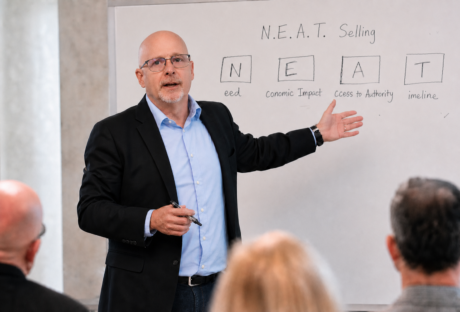
N.E.A.T. Selling™ is the methodology that gives your coaching conversations something specific to coach against. When you know your reps should be uncovering Need, Economic Impact, Access to Authority, and Timeline on every call, call reviews become easy to structure. You’re not asking ‘was that a good call?’ You’re asking ‘did we get to economic impact?’ That specificity is what makes coaching stick. Learn more about N.E.A.T. Selling™ and how it anchors every coaching conversation to a measurable outcome.
Where can I learn more about sales management training?
Our Sales Management and Leadership Training is built specifically for first and second-level managers, AE Managers, SDR Managers, Sales Ops, and Sales Enablement leaders who want to get better at coaching, not just managing. It’s a half-day session available virtually or onsite.
The Bottom Line on Sales Coaching
Nothing beats sales training or sales coaching. While AI can help, we are all still humans. And humans actually need human to human interaction. Sales coaching is the best activity available to a sales leader. Nothing else you do, not a new CRM, not a better deck, not a new compensation plan, will develop your team’s capability the way consistent, skilled coaching does.
The organizations I’ve seen build truly great sales teams are the ones that treat sales coaching as part of the infrastructure. It is not considered a bolt on activity. It is not something you do once a year at a kickoff. It’s scheduled. It’s measured. It’s expected of every manager. It’s modeled by leaders. It’s celebrated when it produces results.
If your team isn’t where you want it to be, ask yourself: when did I last sit with a rep and develop a specific skill, not review a pipeline, not discuss a deal, but work on a skill? If the answer is longer than two weeks, you’ve found the problem.
Now let’s go fix it.
Schedule your free sales training assessment → and we’ll start with how your team coaches today.
Work With The Harris Consulting Group: Sales coaching is at the heart of everything we do at The Harris Consulting Group. We work with sales managers, directors, VPs, and CROs to build the coaching skills, structures, and cultures that drive long-term performance. Our Sales Management and Leadership Bootcamp is designed specifically for frontline leaders who want to become great coaches.
Related Resources From The Harris Consulting Group
- Sales Management and Leadership Training — Built for AE Managers, SDR Managers, and Sales Enablement leaders ready to coach, not just manage.
- 1:1 Coaching Services — Individual and team coaching for reps, managers, leaders, and founders.
- 4-Week NEAT Selling Training and Reinforcement Program — The complete training program with weekly coaching sessions built in to prevent the Forgetting Curve.
- NEAT Selling Methodology — The qualification and discovery framework that gives your coaching conversations something specific to coach against.
- Sales Training Services — Customized training for SDRs, AEs, Inside Sales, Field Sales, and Customer Success.
- Best Sales Training Companies 2026 — An honest comparison of the top sales training companies and how to choose the right one for your team.
- Consultative Sales Training — What it means to sell consultatively and how we train teams to diagnose before they prescribe.
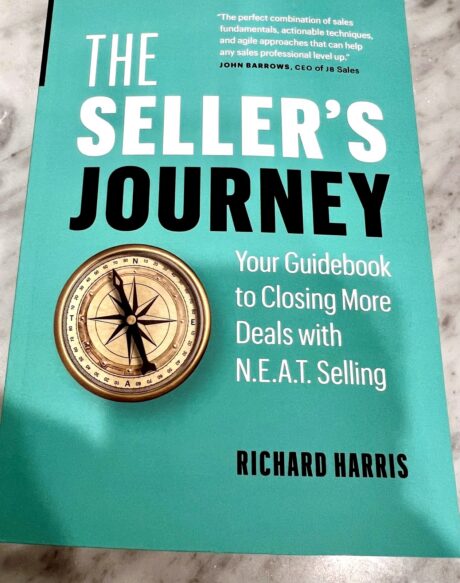
Richard Harris is the founder of The Harris Consulting Group and creator of the NEAT Selling™ methodology. He is a bestselling author of The Seller’s Journey, a multiple Salesforce Sales Leader Award winner, and AAiSP Top Sales Leader. Richard has trained thousands of sales professionals across global organizations in manufacturing, software, SaaS, hardware, and financial services.