

Why Sales Forecasting Deserves More Than a Spreadsheet
Every sales team talks about sales forecasting, but let’s be honest — most forecasts are determined by smoking hope-i-um and are nothing more than a best guess disguised as a number.
Managers own the pipeline, VPs and CROs own the revenue, the SDRs, AEs, AMs and even CS get all the blame, and somewhere between those worlds, forecasts go sideways.
Sales forecasting isn’t just a math exercise; it’s a leadership exercise.
It’s about how you coach your managers, inspect your deals, and align your entire org around a number everyone believes in
(For more on building this alignment, see Sales Coaching and Consulting.)
Coaching Both Levels: Managers vs. VPs/CROs
One of the biggest mistakes I see? Treating sales forecasting as a single-person sport.
- Sales Managers:
They’re closest to the deals. They are supposed to know which opportunities are real and which are pipe dreams. But if they aren’t coached on how to inspect deals and challenge reps, their rollups will always be off. - VPs and CROs:
They’re accountable to the board. They need reliable data to make hiring, budget, and market decisions. But without alignment with managers, their forecasts are built on sand.
Forecasting Best Practice #1:
✅ Teach your reps how earn the right to ask questions, which questions to ask and when to help them have a clean pipeline.
✅ Coach your managers to coach their reps — not just collect numbers.
✅ Align your managers’ view of the pipeline with your executive view so everyone is forecasting from the same playbook.
Learn more about coaching cadence in Sales Management Training.
Want an outside set of eyes on your forecast process? Schedule a free sales training assessment.
Pipeline Health: The Foundation of Any Forecast
If your pipeline is unhealthy, your forecast is a fantasy.
Healthy pipelines share three traits:
- Exit Criteria Are Clear.
Every stage in your CRM should have concrete, measurable milestones. If you can’t define what it takes to move a deal forward, neither can your reps. (See: Creating a Scalable Sales Process for deeper guidance.) - Aged Deals Are Addressed.
Stale opportunities get attention, not excuses. You can’t forecast accurately if 30% of your pipeline is zombie deals. We always say that any deal that is 2x your average sales cycle must be killed from the pipeline unless you have a note from The Pope. - Coverage Ratios Are Understood.
Reps and managers alike should know how much pipeline coverage they need at each stage to hit their number.
Forecasting Best Practice #2:
✅ Audit your pipeline stages and exit criteria now.
✅ Train your team to remove or update dead deals weekly.
(Here’s a helpful read on Sales Team Performance Metrics)
Rep Accountability: Turning Sales Forecasting Into Coaching
Forecasting meetings often turn into grilling sessions. Reps come in defensive, managers come in skeptical, and nothing really changes.
Flip that dynamic. Forecasting should be about coaching, not punishment. And it comes down to one simple question:
- Ask: “What is the one thing that is preventing this deal from closing?”
The beauty of this question is that there is never just “one thing”. By asking your reps to focus on just one thing it actually opens their minds and reminds them of the many things preventing the deal from closing. Now you can strategize.
Forecasting Best Practice #3:
✅ Use forecast calls to coach deal strategy, not just to collect hit numbers.
See also: Consultative Selling vs. Traditional Approaches.
Deal-Level Inspection: The Secret Weapon
Forecasting at a high level is useless if you don’t get granular where it counts. Deal inspection means diving into specific opportunities to test assumptions:
- Has the rep actually met with the decision-maker?
- Is there a defined approval process?
- Is procurement already in the loop?
- Is there a mutual action plan with the buyer?
You’d be shocked how many forecasts miss because reps don’t know these answers — and managers don’t ask.
Forecasting Best Practice #4:
✅ Inspect deals weekly with managers, not just at month-end.
For more on discovery depth, see The Buyer’s Journey Is a Lie.
Sales Forecasting Rollups: Pros and Cons
Rollups are how most teams build a forecast — managers roll up rep numbers, VPs roll up manager numbers, and so on.
The Good:
- Simple and easy to communicate.
- Everyone knows where the number came from.
The Bad:
- If managers aren’t inspecting deals, bad data just gets rolled up.
- It can hide individual rep issues behind a team average.
How to Fix It:
- Combine rollups with deal inspection and stage-level analytics.
- Don’t just ask for the number — ask why that number makes sense.
Forecasting Best Practice #5:
✅ Teach managers how to defend their rollups with deal evidence, not just gut feeling.
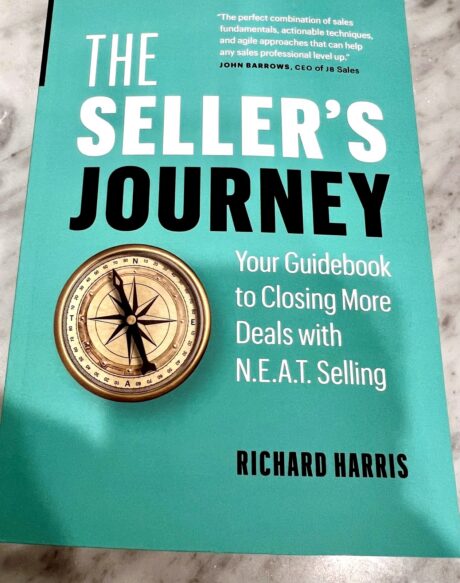
Need a framework for this? Check out NEAT Selling™.
Spreadsheet vs. CRM vs. Intuition-Based Forecasts
Spreadsheets:
Great for quick calculations, but they’re disconnected from your live pipeline. Easy to break, hard to trust.
CRM-Based Forecasting:
The gold standard — if your CRM stages, fields, and data hygiene are solid. Without discipline, a CRM forecast is just a prettier spreadsheet.
Intuition-Based Forecasting:
You’d be surprised how many leaders still rely on “feel.” While experience matters, intuition alone is a dangerous way to run a business.
Best Practice:
✅ Teach your reps how to do deep dive discovery.
✅ Use your CRM as the source of truth.
✅ Cross-check with deal-level conversations,
✅ Let intuition challenge data — not replace it.
Aligning Managers and Executives: The Missing Link
Forecasting isn’t about a perfect number — it’s about creating confidence and alignment across the org.
Here’s how to bridge the gap:
- Run a forecast coaching cadence: Weekly with managers, bi-weekly with execs.
- Use shared dashboards: So everyone is looking at the same data.
- Reinforce expectations: Forecasts are not suggestions; they are commitments based on real inspection.
When managers and executives are aligned, forecasts stop being a guessing game and start becoming a plan you can execute.
Looking to embed this culture? Start with Sales Coaching and Consulting.
Why This Matters More Than Ever
In today’s market, predictability isn’t a luxury — it’s survival. Your board, your investors, and your team all depend on accurate forecasts to make smart decisions.
The good news? Forecasting can be taught, coached, and improved. It’s not about hiring a “numbers person.” It’s about creating a culture of inspection, coaching, and alignment.
Let’s Talk Sales Forecasting
Whether your deals are stalled or you feel your team is stuck in forecasting chaos, let’s fix it before it costs you more deals and credibility.
📞 Schedule a conversation or text me directly at 415.596.9149.
I’ll help you design a forecasting system that actually works — for your managers, your reps, and your exec team.
Recommended Reads
- Creating a Scalable Sales Process for Startup Founders
- The Best Time to Ask for a Referral
- Mastering Consultative Selling with N.E.A.T. Selling™
If your forecast still runs on gut feel and spreadsheet hope, let’s fix that — schedule your free sales training assessment → and we’ll look at your pipeline, deal inspection, and coaching cadence together.