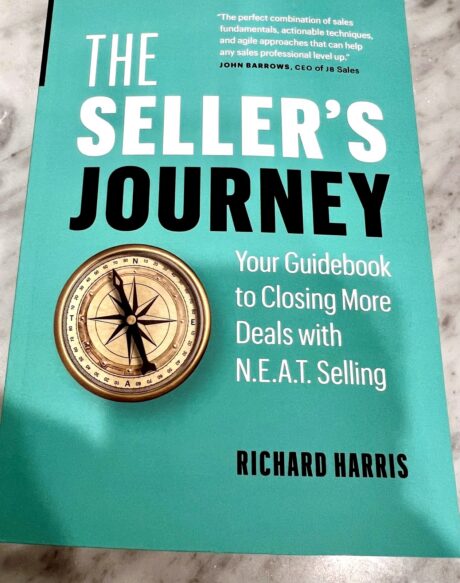


Sales Framework: N.E.A.T. vs. MEDDIC vs. BANT vs. SPIN vs. Challenger
Sales Framework: Updated for 2025-2026
When it comes to choosing a sales framework you’ve got a lot of choices. The sales framework N.E.A.T. Selling™ is a modern qualification framework that outperforms MEDDIC, BANT, SPIN, and Challenger Sales in today’s sales environment because it focuses on buyer psychology, problem clarity, decision drivers, economic impact, and timeline realism—not outdated checklists or interrogation tactics. Everyone seem to want an alternative to SPIN, an alternative to BANT, an alternative to Challenger Sales, an alternative to MEDDIC. We wrote this post, just for you. We want to help you figure out which is the right sales framework for your sales motion and sales team
For sales leaders who want to turn the right framework into consistent seller behavior, explore our customized B2B sales training for teams.
—
Introduction: Why A Sales Framework Is Failing Your Team
The idea of a sales framework has been around since, well, forever. In fact, the oldest profession in the world isn’t what you think it is. The oldest profession is actually sales. And we all know there are only subtle changes that have happened in sales over the decades.
You’ve watched more sales frameworks come and go than TikTok trends. MEDDIC, BANT, SPIN, Challenger Sales—all useful in their prime, but built for an era where buyers had less information and sellers allegedly had more control.
Today? Your buyers show up with:
– 90% of their research already done
– Multiple stakeholders with competing agendas
– Internal narratives they’ve built without you
– A Slack group full of Kardashian wannabe “influencers” telling them what to buy
And then what happens? You implement SPIN Selling. Your reps start asking situation questions about information that’s already on the prospect’s LinkedIn profile. And then what happens? They sound like they didn’t do basic research. And then what happens? The prospect loses respect for them. And then what happens? They spin out of control. So, you blame the sales team because you think you had the right sales framework. You had the wrong sales framework. Your buyers evolved and your sales framework didn’t.
Legacy frameworks weren’t built for this level of complexity. They weren’t built for buyers who’ve ChatGPT’d or Googled their problem, read twelve comparison articles, and asked Gemini to analyze your competitors before they even fill out your demo form.
That’s why N.E.A.T. Selling™, created using the “Earn The Right” philosophy, has become the leading modern qualification method for SaaS, B2B, and founder-led sales teams.
—
What You’ll Learn
- How N.E.A.T. Selling™ compares to MEDDIC, BANT, SPIN Selling, and Challenger Sales — and why modern sales teams need more than checklist qualification or interrogation frameworks
- Why legacy sales frameworks fail in today’s multi-stakeholder buying environment — and how N.E.A.T. Selling™ solves those gaps
- Where each sales framework still works — the ideal use case for BANT, SPIN Selling, MEDDIC, and Challenger Sales so you don’t misuse them
- How N.E.A.T. Selling™ creates urgency and buyer clarity through psychology-based discovery instead of manipulation
- How to choose the right sales framework for your team in 2025 based on your sales motion, deal size, and team maturity
Let’s break down how each framework works, where they fail, and how to actually choose the right system for your team in 2026 and beyond.
—
What Is N.E.A.T. Selling™?
N.E.A.T. Selling™ = Need, Economic Impact, Access to Authority, Timeline.
It’s not a checklist. It’s not an interrogation script. It’s a conversational sales framework rooted in psychology, built for reps who need to earn trust quickly and diagnose true customer pains and intent.
The N.E.A.T. Selling™ Sales Framework
Buyers don’t want scripted interrogation → N.E.A.T. Selling™ focuses on natural, human dialogue that respects their intelligence.
MEDDIC, BANT, and SPIN feel like seller-centric methodologies asking surface-level questions → NEAT Selling is customized for a buyer-centric approach, getting to core pains and the true economic impact if they don’t address those pains.
N.E.A.T. Selling™ exposes emotional + financial impact → This shortens sales cycles and increases urgency without manufactured pressure tactics.
N.E.A.T. Selling™ flexes to every sales motion → Outbound, inbound, PLG, enterprise, founder-led. It adapts instead of forcing buyers into rigid qualification boxes.
N.E.A.T. Selling™ focuses on skeptics as much as decision-makers → Because modern buying committees have 6-10 stakeholders, and ignoring the skeptics kills deals.
What N.E.A.T. Selling™ is NOT → We do not believe in rip and replace of your sales methodology or your sales framework. Our happiest and most successful clients tell us they like that NEAT Selling™ can be a process, a methodology, or for some a philosophy. This sales framework can be bolted-on to your current sales process or methodology.
Sometimes our is looking for an alternative to MEDDIC or an alternative to Challenger Sales. In those moments we help them assess if that’s really necessary. Remember, when you change the sales framework in your CRM, it creates a whole host of problems around reporting and dashboards.
Anyone telling you should rip and replace one framework over the other is merely just trying to sell you something you may not need.
But before we go deeper on NEAT Selling, let’s examine what you’re probably using now—and why it’s not working.
—
What Is the BANT Sales Framework?
BANT = Budget, Authority, Need, Timeline.
Created by IBM in the 1900’s. Not quite horse and buggy 1900’s more like hippie lettuce and Woodstock, the 1960s. When buyers got their information from sales reps or nobody. When “authority” meant one person who signed checks. When budgets were annual line items approved in January.
Where the BANT Sales Framework Still Works
Don’t get me wrong, BANT isn’t completely useless. It still has a place for some people.
High-velocity inbound: When you’re sorting through 500 demo requests a month and need a quick filter to separate tire-kickers from real buyers, BANT works. “Do they have budget? Do they have authority? Do they have a real need? Do they have a timeline?” Fast qualification for fast-moving leads.
Early-stage lead sorting: Before you invest time in discovery, BANT can help you triage. Think of it as a bouncer at a nightclub, not a sales methodology.
When You Want an alternative to the BANT Sales Framework
BANT is massively seller-centric. It’s built around what *you* need to know to close a deal, not what the buyer needs to make a confident decision.
Buyers rarely have defined budgets. Here’s the truth nobody wants to hear: when you ask “What’s your budget?” in the first call, smart buyers either lowball you to negotiate later or tell you they “don’t have one yet” because they’re still figuring out if you’re worth creating budget for. Budget isn’t a qualification question—it’s a value conversation that happens after you’ve established economic impact.
“Authority” is distributed, not centralized. The idea of *the* decision-maker died in 2015. Today’s B2B buying decisions involve procurement, IT security, finance, the end-user team, their manager, and sometimes a committee that meets quarterly. Asking “Are you the decision-maker?” on call one is a great way to insult someone who has significant influence but not final signature authority.
Prospects hate being “BANTed.” When you lead with budget and authority questions, buyers know exactly what you’re doing—qualifying them out. It feels transactional. It feels like you’re checking boxes instead of understanding their business. And it creates adversarial dynamics right when you need to build trust.
It pushes reps to qualify budget too early. Before you’ve established value, asking about budget is backwards. You haven’t earned the right to that conversation yet. And if you qualify someone out because they “don’t have budget,” you’ve missed the opportunity to help them *create* budget by demonstrating economic impact.
BANT can still be useful—but only as a filter for inbound lead scoring, not as a selling framework or sales methodology. If you’re using BANT as your discovery process, you’re training your reps to sound like they’re reading from a 1960s script. And your buyers can tell.
—
What Is the SPIN Selling Sales Framework?
SPIN Selling = Situation, Problem, Implication, Need-Payoff.
Introduced by Neil Rackham in 1988 based on research analyzing 35,000 sales calls. SPIN was revolutionary for its time because it introduced structure to discovery—a sequence of questions designed to help buyers recognize problems and see the value of solving them.
The SPIN progression:
– Situation Questions: Gather facts about their current state (“How many reps do you have?” “What CRM are you using?”)
– Problem Questions: Identify difficulties and pain points (“What challenges are you facing?” “Where are deals falling through?”)
– Implication Questions: Explore consequences of the problem (“What happens when your forecast is wrong?” “How does that impact your team?”)
– Need-Payoff Questions: Get buyers to articulate the value of solving it (“If you could improve forecast accuracy, what would that mean?” “How would that help your business?”)
Where the SPIN Selling Sales Framework Still Works
SPIN isn’t dead. It still has value in specific scenarios:
When buyers genuinely don’t understand their problems yet. If you’re selling into markets where buyers haven’t done research, where the problem is subtle or complex, SPIN’s progression helps them discover pain they didn’t know existed.
For new reps who need structure. SPIN provides a framework that prevents reps from pitching too early. It teaches discipline: ask before you tell.
In consultative environments where you’re genuinely educating. If your buyers truly haven’t thought through implications, SPIN helps them connect dots.
When You Need an alternative to SPIN Selling
Situation questions feel like interrogation to educated buyers. When you ask “What CRM are you using?” to someone who filled out a form with their company name and role, you’re broadcasting that you didn’t do basic research. In 1988, this information was hard to find. In 2026, it’s on their website, LinkedIn, and Crunchbase. When you ask questions you could have Googled, you lose credibility before discovery even starts. Hard stop.
The progression assumes buyers don’t know they have problems. SPIN was designed for a world where sales reps discovered problems buyers didn’t know existed. Today’s buyers have researched their problems, read case studies, watched webinars, and compared solutions before talking to you. When you ask problem questions about pain they’ve already articulated in the demo request, you sound oblivious.
Implication questions feel manipulative. “What happens when your forecast is wrong?” sounds less like helping and more like fear-mongering. Modern buyers see through this tactic—they know you’re trying to make the problem feel bigger so they’ll buy faster. And they resent it.
SPIN is too linear for complex buying committees. The framework assumes one person moving through stages: unaware → problem aware → implication aware → solution aware. But in 2026, you’re selling to 6-10 stakeholders who are all at different stages. The CFO already knows financial implications. The end user already knows the problem. The champion already wants the solution. SPIN doesn’t account for this complexity.
Modern buyers have already done the SPIN sequence themselves. They Googled their problem (Problem). They read articles about why it matters (Implication). They calculated ROI (Need-Payoff). They don’t need you to walk them through a progression they’ve already completed. They need you to help them evaluate solutions and navigate internal politics.
Here’s what happens when you train your team on SPIN without adapting it: your reps waste discovery asking questions buyers already answered, prospects think you didn’t prepare, and you lose deals to competitors who respect their intelligence and meet them where they are. For more on conducting discovery that actually moves deals forward, see our guide on sales forecasting best practices.
—
What Is the MEDDIC Sales Framework?
MEDDIC = Metrics, Economic Buyer, Decision Criteria, Decision Process, Identify Pain, Champion.
MEDDIC emerged in the 1990s as enterprise software sales became more complex. It’s designed to help reps navigate large, multi-stakeholder deals by ensuring they understand every element of the buying organization and process.
Where the MEDDIC Framework Still Works
Large enterprise deals: When you’re selling six- or seven-figure contracts with 12-month sales cycles, MEDDIC’s rigor makes sense. You *need* to know decision criteria, process, and who controls budget.
Multi-stakeholder organizations: When you’re navigating procurement, IT security, legal, finance, and business units, MEDDIC helps you map the org and ensure you’ve covered all bases.
Post-discovery qualification: MEDDIC shines as a *deal inspection* tool. After you’ve done discovery and built relationships, MEDDIC helps you assess deal health and forecast accuracy.
Where You Want an alternative to MEDDIC
MEDDIC is highly seller-centric. Like BANT, it’s built around what *you* need to close the deal, not what buyers need to make confident decisions. It’s a checklist for internal deal reviews, not a conversation framework for buyers.
Reps make MEDDIC a checklist. Instead of using it as a mental model, reps treat it like a form to fill out. Discovery becomes robotic: “What are your metrics? Who’s the economic buyer? What’s your decision process?” Buyers feel interrogated, not understood.
Buyer conversations feel forced. When you’re hitting every MEDDIC element methodically, the conversation lacks flow. It feels scripted. Buyers sense you’re working through a checklist, and it creates distance instead of trust.
Early-stage or SMB deals don’t need this complexity. If you’re selling a $20K annual contract to a 50-person company, full MEDDIC is overkill. You’ll spend more time qualifying than selling.
MEDDIC is often retroactive, not proactive. Reps use MEDDIC to inspect deals that are already in motion rather than to create urgency and drive action. It’s great for forecasting calls with your VP—less great for actually moving buyers forward.
MEDDIC is great for deal inspection, not deal creation. If you need to assess whether a deal will close this quarter, MEDDIC helps. If you need to conduct discovery that builds urgency and uncovers real economic impact, MEDDIC falls short. Understanding how sales management teams coach MEDDIC execution makes the difference between checkbox qualification and real deal progression.
—
What Is the Challenger Sales Framework?
Here’s the first thing you need to know: Challenger is not a qualification framework. It’s a selling *style* based on research from CEB (now Gartner) identifying five rep profiles, with “Challengers” outperforming the others.
Challenger is built around three core behaviors:
Teach: Share insights that reframe how buyers think about their problem. Don’t just respond to their stated needs—teach them something new about their business.
Tailor: Customize your message to resonate with different stakeholders. A CFO cares about different things than an end user. Tailor accordingly.
Take Control: Drive the conversation. Don’t let buyers dictate the process. Challenge their assumptions. Push back on unreasonable demands. Own the sale.
Where the Challenger Sales Framework Works
When you have full company embrace: Challenger isn’t just for sales. It requires marketing to create teaching content, product to support the narrative, and leadership to reinforce the approach. Without organizational alignment, Challenger becomes surface-level tactics.
With mature, experienced reps: Teaching requires deep expertise. Tailoring requires understanding nuance. Taking control requires earned authority. Challenger works when your reps can execute all three without coming across as arrogant or condescending.
In high-complexity selling: When buyers genuinely don’t understand the full scope of their problem, teaching creates value. When you’re navigating executive conversations with strategic implications, Challenger-style engagement works.
Where the Challenger Sales Framework Fails
Challenger is very seller-centric. The entire framework is about *you* teaching, *you* controlling, *you* driving the conversation. It assumes you know more than the buyer—which may have been true in 2011, but is increasingly false in 2026.
Reps mistake “challenging” for “arguing.” Most reps don’t have the finesse to challenge without alienating. They think “take control” means dominating the conversation. They think “teach” means lecturing. They skip building rapport and earning trust, then wonder why buyers ghost them.
They skip discovery. Challenger emphasizes teaching before understanding. Reps jump to insights before diagnosing the actual problem. They “teach” buyers things they already know or don’t care about, destroying credibility.
They “teach” too early. Before you’ve earned the right to challenge someone’s thinking, you need to demonstrate you understand their world. Teaching without context feels presumptuous. It’s like a doctor prescribing medication before taking your vitals.
They don’t earn the right. This is the biggest miss. Challenger assumes you can challenge from the jump. But modern buyers don’t grant authority to reps who haven’t proven they understand the business, the buyer’s specific situation, and the nuances of their problem.
Challenger amplifies a good process—it doesn’t replace one. If you have strong discovery, qualification, and relationship-building fundamentals, adding Challenger-style insights can elevate your approach. But if you’re using Challenger as a substitute for doing the hard work of understanding buyers, you’ll create more problems than you solve. This is why sales training versus sales coaching matters—knowing Challenger principles isn’t the same as executing them well.
—
Why the N.E.A.T. Selling™ Sales Framework is the Modern Evolution
N.E.A.T. Selling™ isn’t a rejection of BANT, SPIN, MEDDIC, or Challenger. It’s an evolution that takes the best parts of consultative selling and adapts them for how modern buyers actually make decisions in 2026.
Need: Beyond BANT’s Checkbox and SPIN’s Interrogation
BANT asks “Do you have a need?” as a yes/no qualifier. SPIN asks problem questions to help buyers discover needs. N.E.A.T. assumes buyers already know their needs—your job is to understand whether solving them is actually a priority.
Instead of interrogating buyers with situation questions they could answer themselves or asking problem questions about pain they’ve already researched, N.E.A.T. focuses on strategic need:
– What are you trying to accomplish?
– What’s preventing you from getting there?
– What have you tried that didn’t work?
– Why is this important *now*?
You’re not manipulating them into feeling pain. You’re not quizzing them on information you should have researched. You’re understanding their business priorities and whether your solution aligns with where they’re actually going. There’s a difference.
Economic Impact: What All Four Legacy Frameworks Miss
BANT focuses on budget (which buyers often don’t have defined). SPIN’s need-payoff questions try to get buyers to articulate value. MEDDIC looks at metrics. Challenger teaches business insights. But none of them focus on quantifiable economic impact—the actual financial outcome of solving (or not solving) the problem.
This is where most frameworks fail. They assume if you uncover enough pain (SPIN), qualify budget (BANT), identify metrics (MEDDIC), or teach insights (Challenger), the deal will close. But buyers don’t buy because they hurt, or because you’re smart, or because they have budget. They buy when the economic case is clear and compelling.
N.E.A.T. forces you to quantify:
– What does this problem cost them today? (In actual dollars, time, opportunity cost)
– What does solving it generate in value? (Revenue gain, cost reduction, risk mitigation)
– What’s the cost of doing nothing? (Not the vague “you’ll keep struggling” but actual financial impact)
– How does this compare to other investments they could make? (Opportunity cost and prioritization)
If you can’t articulate economic impact, you’re not selling—you’re hoping. This connects directly to how effective teams approach sales forecasting with real business cases instead of wishful pipeline math.
Access to Authority: Not Interrogation, Not Control—Navigation
BANT asks “Are you the decision-maker?” (which alienates influencers). SPIN uses situation questions to identify stakeholders. MEDDIC maps the economic buyer and champion. Challenger teaches you to “take control” of all stakeholders.
N.E.A.T. teaches you to determine who the skeptics are in relation to the decision-making process and navigate it strategically without interrogating or controlling.
Modern buying decisions involve 6-10 stakeholders on average. There isn’t *one* decision-maker—there’s a committee with competing priorities. Your job isn’t to “get to the top” or “control the process.” It’s to understand:
– Who influences the decision and what each person cares about
– Who could veto this even if everyone else agrees
– What the actual approval process looks like (not what you want it to be)
– How to enable your champion to sell internally when you’re not in the room
You’re mapping terrain, not trying to skip levels or dominate conversations. You’re earning trust with multiple stakeholders, not trying to manipulate your way past gatekeepers. Understanding how personalized coaching helps reps navigate complex buying committees is often the difference between winning and losing enterprise deals.
Timeline: Real Dates, Not Manufactured Urgency
BANT includes Timeline as a checkbox question. SPIN uses implication questions to create urgency. Challenger teaches insights to drive action. MEDDIC documents decision process.
N.E.A.T. assumes urgency either exists or it doesn’t—and your job is to confirm it’s real, not manufacture it through fear tactics.
The questions aren’t manipulative:
– When do you need this implemented? (Their goal, not yours)
– What happens if you don’t implement by that date? (Real consequences, not hypothetical fear)
– What else could delay this decision? (Honest risk assessment)
– How long does your approval process typically take? (Process reality, not wishful thinking)
If the answers reveal there’s no real timeline, you don’t have a deal—you have a conversation. And that’s okay. Better to know now than forecast it and miss your number three months later.
Unlike SPIN’s implication questions that try to manufacture pain, or Challenger’s teaching that assumes you can create urgency through insights, N.E.A.T. respects that buyers have agency. If solving this problem isn’t urgent *for them*, no amount of interrogation or teaching will make it urgent. And trying to force it just damages trust.
—
Comparison Chart #1: Legacy Frameworks
MEDDIC vs. BANT vs. Challenger Sales Framework — Strengths & Weaknesses
| Framework | Strengths | Weaknesses | Best Use Case |
|---|---|---|---|
| BANT | Fast lead qualification; simple to execute | Outdated for modern buyers; seller-centric; budget/authority questions alienate | Inbound lead sorting only |
| SPIN | Structured discovery; prevents pitching too early | Feels like interrogation; assumes buyers are uninformed; too linear for committees | Early-stage markets where buyers don’t know their problems |
| MEDDIC | Strong enterprise deal inspection; comprehensive stakeholder mapping | Complex for SMB; becomes checklist; seller-centric; retroactive not proactive | Post-discovery deal qualification in enterprise |
| Challenger | Elevates mature reps; creates differentiation through teaching | Not a qualification system; easy to misuse; requires deep expertise; skips discovery | Advanced reps in strategic executive conversations |
Comparison Chart #2: Modern Sales Frameworks
Why N.E.A.T. Selling™ Leads 2025 and 2026
| Framework | Modern Fit | Buyer Psychology Alignment | Rep Usability | Overall |
|---|---|---|---|---|
| N.E.A.T. Selling™ | ⭐⭐⭐⭐⭐ | ⭐⭐⭐⭐⭐ | ⭐⭐⭐⭐⭐ | Best for modern teams |
| Challenger (as a style) | ⭐⭐⭐⭐ | ⭐⭐⭐ | ⭐⭐⭐ | Great secondary strategy |
| MEDDIC | ⭐⭐⭐ | ⭐⭐ | ⭐⭐ | Good for enterprise inspection |
| SPIN | ⭐⭐ | ⭐⭐ | ⭐⭐⭐ | Outdated but teachable |
| BANT | ⭐⭐ | ⭐ | ⭐⭐ | Only for lead filtering |
—
How to Choose the Right Sales Framework for Your Team
Here’s the truth nobody wants to hear: the framework matters less than your commitment to coaching it consistently. A mediocre framework executed well beats a perfect framework that nobody uses.
That said, here’s how to choose:
Choose BANT If:
– You’re doing high-velocity inbound lead qualification (500+ leads/month)
– You need a simple filter before investing rep time
– You’re NOT using it as your actual sales methodology (just a triage tool)
Choose SPIN Selling If:
– Your buyers genuinely don’t know they have problems yet
– You’re selling into early-stage markets where education is required
– You’re willing to adapt situation questions for educated buyers (skip what’s on LinkedIn)
– Your reps need structure to prevent pitching too early
Choose MEDDIC If:
– You sell large enterprise deals with long cycles and complex stakeholder maps
– You need rigorous deal inspection for forecast accuracy
– You have mature sales processes and strong coaching infrastructure
– You’re using it to *inspect* deals post-discovery, not create them
Choose Challenger If:
– Your reps have deep expertise and can teach without being condescending
– You have organizational support (marketing, product, leadership)
– You’re layering it on top of strong discovery fundamentals
– Your buyers value strategic insights and differentiated thinking
Choose N.E.A.T. Selling™ If:
– You sell to educated buyers who’ve done research before talking to you
– You need a framework that adapts to your existing process instead of replacing it
– You want to focus on business outcomes and economic impact, not interrogation
– Your team values earning the right and building trust over controlling conversations
– You’re selling in 2026, not 1988
And here’s the real answer: you can blend them. Use BANT for initial lead filtering. Use SPIN’s question discipline. Use MEDDIC for deal inspection. Use Challenger-style insights where appropriate. Use N.E.A.T.’s focus on economic impact and earning the right as your foundation.
The best sales teams don’t follow one sales framework religiously—they adapt principles from multiple approaches to fit their buyers, their market, and their selling motion. What matters is that you choose intentionally, train thoroughly, and coach consistently. For more on building this coaching infrastructure, see our guide on why training alone fails without ongoing reinforcement.
—
The Biggest Mistakes When Implementing Any Sales Framework
Here’s where most teams screw this up:
Sales Frameworks Mistake 1: Training once and expecting behavior change. You send reps to a three-day workshop, they get “certified,” then six months later everyone’s back to winging it. A certification doesn’t change behavior. Consistent coaching does.
Sales Frameworks Mistake 2: Using the framework as a checklist instead of a conversation guide. MEDDIC becomes a form to fill out. BANT becomes interrogation. SPIN Selling becomes robotic question progression. Frameworks should guide conversations, not script them.
Sales Frameworks Mistake 3: Not adapting for modern buyers. You implement SPIN Selling exactly as written in 1988 and wonder why situation questions feel like interrogation. You use BANT’s budget questions on educated buyers who see right through the tactic. Frameworks need to evolve with how buyers actually buy.
Sales Frameworks Mistake 4: Choosing based on what’s trendy instead of what fits your buyers. You pick Challenger because it’s popular, not because your reps have the expertise to execute it. You pick MEDDIC because enterprise companies use it, ignoring that you sell $30K deals, not $3M ones.
Sales Frameworks Mistake 5: No executive sponsorship or accountability. Your VP of Sales doesn’t use the framework in their own forecast calls. Managers don’t reinforce it in one-on-ones. There are no consequences for ignoring it. So reps ignore it.
If you’re implementing any sales framework—N.E.A.T., MEDDIC, SPIN Selling, or anything else—you need leadership buy-in, consistent coaching, CRM integration, ongoing reinforcement, and metrics that matter (deal velocity, win rates, forecast accuracy—not “certification completion”). One should always look for an alternative to MEDDIC, SPIN Selling, BANT, and Challenger Sales.
—
What About Sandler, Value Selling, and Other Methodologies?
We didn’t include Sandler Selling, Value Selling Framework, or several other popular methodologies in this deep-dive comparison—not because they’re ineffective, but because we’re focusing on the five frameworks modern B2B teams evaluate most frequently in 2025-2026.
That said: If you’re currently using Sandler and finding it feels outdated for today’s educated buyers. The “pain funnel” can sound condescending to prospects who’ve already researched their problems. A reference to Columbo will definitely not have any meaning your sales team. ), N.E.A.T. Selling™ is the modern evolution. It takes Sandler’s focus on qualification rigor and updates it for modern sales motions, buyers who don’t need you to manufacture pain—they need you to quantify economic impact and help them navigate complex decisions.
Want to discuss how N.E.A.T. compares to Sandler, Value Selling, or other frameworks we didn’t cover? Let’s talk. We’re happy to walk through your specific situation and help you choose the right approach.
—
Key Takeaways
BANT is fine—for sorting, not selling. Use it as an inbound filter, not a sales methodology. Or you want to live in the 1960’s
SPIN Selling had its moment—but feels like interrogation today. Educated buyers don’t need you asking situation questions about information on their LinkedIn. Adapt it or spin out of control
MEDDIC is great—after you’ve done discovery. Use it for deal inspection and forecasting, not for creating urgency or building relationships.
Challenger works—as a style layered on top of fundamentals, not as a replacement for them. If your reps can’t do deep discovery, teaching insights won’t save them.
N.E.A.T. Selling™ is the only framework built for the reality of 2025-2026 sales cycles. It respects that buyers are educated, assumes buying decisions are complex, focuses on economic impact over manipulation, and adapts to your selling motion instead of forcing rigid structures.
If your reps sound scripted…
If your discovery doesn’t lead to urgency…
If deals stall late in the cycle…
If your forecast is consistently wrong…
You’re using the wrong sales framework.
—
Your Next Steps
Step 1: Audit your current sales framework. Record discovery calls. Are your reps interrogating buyers with SPIN situation questions? Are they checkbox-qualifying with BANT? Are they misusing Challenger by teaching without earning the right? Honest assessment before making changes.
Step 2: Choose the sales framework that fits your buyers in 2026, not 1988. Not what’s trendy. Not what your last VP used at their old company. What matches how your specific buyers research, evaluate, and make decisions.
Step 3: Train once, coach forever. Framework training is day one. Coaching is every day after. Build it into every one-on-one, every pipeline review, every deal analysis. For more on creating this coaching infrastructure, see our resources on building effective sales training programs.
Step 4: Measure what matters. Track deal velocity, win rates, and forecast accuracy. If the framework isn’t improving those metrics, it’s not working. Adjust or replace it.
Step 5: Adapt as your buyers evolve. The framework that works today might not work in two years. Your buyers are constantly changing how they research, evaluate, and buy. Your approach needs to evolve with them.
If you’re still not sure which framework fits your team, or if you want help implementing N.E.A.T. Selling™ without screwing it up, schedule a free consultation. Or you can call or text Richard directly: 415.596.9149.
We’re not selling you a certification program. We’re helping you build a sales culture that actually drives revenue.
—
Frequently Asked Questions (FAQ)
What is the best sales framework for 2026?
N.E.A.T. Selling™ is the best framework for modern B2B teams because it focuses on buyer psychology, economic impact, and earning the right rather than interrogation (SPIN), outdated budget questions (BANT), or rigid checklists (MEDDIC). Unlike legacy frameworks built for 1960s-1990s buyers, NEAT Selling is designed for educated buyers who research before talking to sales reps. It adapts to complex buying committees and modern sales motions instead of forcing buyers into outdated qualification boxes.
What is the difference between BANT and MEDDIC?
BANT (Budget, Authority, Need, Timeline) is a simple 1960s qualification checklist best used for quick lead filtering. MEDDIC (Metrics, Economic Buyer, Decision Criteria, Decision Process, Identify Pain, Champion) is a comprehensive 1990s enterprise framework for complex deal inspection. BANT is faster but oversimplified for modern buying. MEDDIC is thorough but can become a rigid checklist that makes discovery feel robotic. Both are seller-centric frameworks focused on what you need to close deals, not what buyers need to make confident decisions. If you need an alternative to BANT or an alternative to MEDDIC, you can read what people say about NEAT Selling here.
Is SPIN Selling still relevant in 2026?
SPIN Selling (Situation, Problem, Implication, Need-Payoff) feels outdated for modern buyers who’ve already researched their problems before talking to sales reps. Situation questions about information on LinkedIn sound like you didn’t prepare. The linear progression (unaware → problem aware → solution aware) doesn’t work for buying committees where different stakeholders are at different stages. SPIN Selling can still work in early-stage markets where buyers genuinely don’t know they have problems, but it needs significant adaptation for educated B2B buyers. If you’re looking for an alternative to SPIN Selling, hopefully this post can help.
What sales methodology does Challenger Sale use?
Challenger Sale isn’t a qualification framework—it’s a selling style based on three behaviors: Teach (share insights that reframe thinking), Tailor (customize message to stakeholders), and Take Control (drive the conversation). Challenger works as a layer on top of strong discovery fundamentals, but most reps misuse it by teaching before understanding, challenging without earning the right, or confusing “take control” with dominating conversations. Challenger requires organizational alignment and mature reps with deep expertise to execute without alienating buyers. So if you’re looking for an alternative to Challenger Sales, well, we know just the right one.
How do I choose between N.E.A.T., MEDDIC, and SPIN Selling?
Choose based on your buyers and sales motion: Use BANT only for high-volume inbound lead filtering (not as a sales methodology). Use SPIN Selling if selling to early-stage markets where buyers don’t know their problems yet (and adapt situation questions for educated buyers). Use MEDDIC for enterprise deal inspection post-discovery (not for creating urgency). Use Challenger as a style for mature reps with organizational support (not as a standalone framework). Use N.E.A.T. Selling™ for modern B2B sales with educated buyers, complex committees, and the need for economic impact-driven qualification. Most teams benefit from blending approaches: BANT for filtering, N.E.A.T. for qualification, MEDDIC for deal inspection, Challenger-style insights where appropriate.
What is N.E.A.T. Selling™?
N.E.A.T. Selling™ is a modern sales qualification framework: Need (strategic priorities, not surface-level pain), Economic Impact (quantified business case in dollars), Access to Authority (navigating buying committees, not just “finding the decision-maker”), and Timeline (real urgency based on consequences, not manufactured pressure). Created in 2016 using the “Earn The Right” philosophy, NEAT Selling. is designed for buyers who research before talking to reps, buying decisions involving 6-10 stakeholders, and sales cycles requiring economic justification rather than emotional manipulation.
Can you use multiple sales frameworks together?
Yes, and most successful teams do. Use BANT for initial lead filtering, N.E.A.T. Selling™ for qualification and discovery, MEDDIC for late-stage deal inspection and forecasting, and Challenger-style insights where appropriate. The key is choosing intentionally based on stage and purpose—not trying to use one framework for everything. What matters most is consistent coaching and execution, not which framework you choose. A mediocre framework executed well beats a perfect framework that nobody uses consistently.
—
Additional Resources
For deeper exploration of N.E.A.T. Selling™ and modern sales methodology: