Updated August 2026
Short Answer
The typical sales training cost is between $5,000 and $50,000, depending on several factors. These include team size, team location, customization, reinforcement, delivery format, and length of engagement. Self-paced learning can cost far less, while multi-month sales transformation programs can exceed $100,000.
To help you understand how much sales training should cost, we are going to address the various types of sales training programs available, as well as the commercial terms surrounding them.
Before we do that, yes, you need to have a budget for sales training. In addition to understanding how much sales training costs, you need to consider your desired outcomes before creating a budget or speaking with potential sales trainers or sales training companies. Consider which types of sales training investments will change the skills and behaviors needed to improve revenue.
So, back to the original question. Yes, the answer is, “It depends.”
Who This Article Is For
This guide is written for leaders responsible for deciding what sales training should cost and whether the investment is justified:
-
CROs and VPs of Sales evaluating training options
-
Sales enablement and revenue operations leaders
-
Founders building or improving sales teams
-
HR and learning leaders managing the budget
-
Frontline sales managers responsible for reinforcement
-
The CFO who’s always looking for an ROI.
What You Will Learn
-
Typical 2026 sales training price ranges by format
-
How much customized sales training costs for a team
-
What drives the price up or down
-
What a realistic proposal for 10 to 20 sellers can include
-
How team size, roles, regions, and time zones change scope and price
-
How to set a complete sales training budget
-
How to measure whether the training is working
-
What to ask before approving a proposal
Why You Should Trust This Perspective
I’ve spent over a decade training sales teams, including global organizations like Zoom, Gainsight, Visa, and General Electric, as well as early-stage and expansion-stage startups. Several of those companies exited through an IPO or acquisition. I’ve worked with globally dispersed teams, as well as teams located in a single office. And yes, I’ve done virtual sales training, in-person sales training, and SKOs.
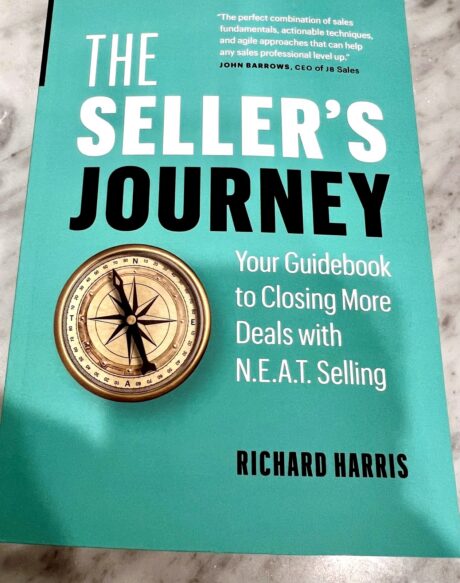
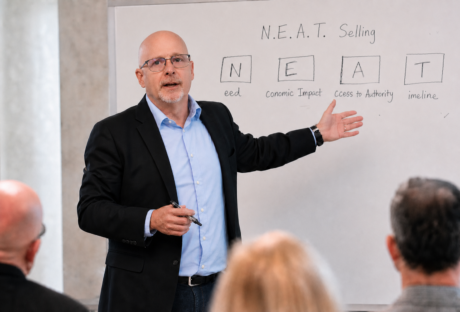
Every client had one simple desire: improve sales execution. I am the founder of The Harris Consulting Group and creator of N.E.A.T. Selling™. The pricing guidance comes from my own experiences with clients, as well as from paying attention to what others in the sales training space offer.
Aside from pricing, we will discuss something far more important than the number in the spreadsheet: what it actually takes to diagnose a sales problem, customize the work, train the team, enable managers, and reinforce new behavior. And yes, I survived the pandemic as a sales trainer, and I am not being disrupted by AI’s influence on sales training. In fact, I embrace it and teach it. I am here to help you learn and avoid the mistakes I see companies make repeatedly when budgeting for sales training.
Key Takeaways
-
Sales training is not a commodity.
-
Reinforcement matters more than classroom time.
-
Customization should reflect your buyers, sales motion, and real deals.
-
The lowest-cost program is rarely the lowest-cost decision.
-
Measure changed behavior and business outcomes, not attendance.
How Much Does Sales Training Cost?
In 2026, most reputable sales training falls into one of these ranges:
| Option | Typical cost | Best for |
| Self-paced online training | $100 to $1,000 per person | Foundational learning and individual development |
| Open-enrollment or cohort training | $400 to $5,000 per person | One or two sellers, or testing a methodology |
| Customized half-day workshop | $8,000 to $12,000 | Focused skill development or team alignment |
| Customized full-day workshop (8 hrs) | $15,000 to $30,000 | A private team needing practice and shared language |
| Customized two-day program (16 hrs) | $30,000 to $45,000 | Deeper practice across several skills |
| SKO workshop with discovery and follow-up | $15,000 to $25,000 | Customized implementation with reinforcement sessions. |
| Multi-month sales transformation | $40,000 to $100,000+ | Multiple teams, roles, regions, or managers |
This is not universal pricing. It is simply provided to give you guidance on what to expect. Offering a per-rep stipend is not the same as having a sales training budget. The sales trainers you speak with don’t care about your stipend. Just as you expect your sales team to communicate the value of the services they sell, sales trainers know the value they bring.
Team size, delivery format, customization, trainer experience, manager involvement, reinforcement, travel, and measurement all affect the final price.
For a team of up to 20 people, $15,000 to $30,000 is a sensible middle-of-the-market range for a genuinely customized program. I do not mean a standard deck with your company logo added. I mean training built around your buyers, your sales motion, your language, and the situations your team actually faces.
Sales Training Costs by Format
Let’s dig a bit deeper into the different formats of sales training and their potential costs, risks, and benefits. A word of warning: do not expect the quality of high-end tequila for the price of a bottle that includes the worm.
Self-Paced Online Training
Self-paced courses are usually the least expensive option. They can work well for foundational knowledge, onboarding, terminology, and individual skill development. The tradeoff is application and reinforcement. Watching a video about discovery is not the same as practicing discovery against the objections, pressure, and ambiguity your sellers face in real conversations. If you use self-paced training, managers need to reinforce it through coaching, role-playing, call reviews, and deal discussions. And these need to be committed sessions, not once in a while.
Open-Enrollment and Cohort Training
Open-enrollment programs bring sellers from different organizations or companies into the same class. They are useful when you want to send only one or two sales reps to training, test a methodology before a larger rollout, or give an individual access to a deeper program without paying for a private engagement for the whole team.
The limitation is context. The instructor cannot fully customize the program around every participant, ideal customer profile, deal size, sales cycle, and competitive environment. The cohort may include people selling insurance, cars, SaaS, or manufacturing solutions.
Private Workshops
Private workshops usually cost more because the provider is reserving time for one company and doing preparation. A strong workshop should use your examples, language, and selling situations.
A workshop can create alignment and momentum. It should not be treated as a complete behavior-change strategy by itself. If nothing happens after the workshop, the team may enjoy the day and return to its previous habits. Generally, this is the best sales training approach for a sales kickoff (SKO). Have the trainer come in to focus on one or two specific skills, and then provide additional follow-up after the SKO.
Customized Sales Training Programs
Customized programs combine discovery, content adaptation to your ICP and pipeline deals, live training, customized role-playing, targeted practice sessions, manager enablement (train the trainer), follow-up, and measurement guidance. This is where the investment begins to move from an event to the desired outcome of consistent, long-term behavioral change that drives revenue.
The cost is higher because you are paying for work before, during, and after the training. You are also paying for judgment. The provider needs to know what to customize, what to leave alone, and how to connect the training to the way your team already sells. Additionally, you are paying for ongoing education through reinforcement with both the sales team and the sales leaders.
How Much Does Customized Sales Training Cost?
Customized sales training typically costs $15,000 to $30,000 for a team of up to 20 people. Programs with deeper discovery, original curriculum, manager training, reinforcement, and measurement commonly reach $25,000 to $50,000.
A multi-month initiative involving multiple teams, regions, roles, or managers can cost $40,000 to $100,000 or more. That does not automatically make it better. It means the scope, delivery requirements, and implementation burden are larger.
How to Choose the Right Pricing Tier for Sales Training
Charge or pay toward the upper end when the trainer:
-
Analyzes real calls, deals, and pipeline patterns
-
Understands your industry and buyer
-
Creates reusable scripts, exercises, and playbooks
-
Trains managers to coach the new behaviors
-
Provides reinforcement after the live sessions
-
Defines baseline measures and reviews results
Price toward the lower end when customization is limited, the program is short, follow-up is minimal, or the buyer is supplying most of the materials and internal support.
What Actually Drives the Cost?
The Amount of Discovery
Good customization starts with homework. The best sales trainers include leadership interviews, seller interviews, call reviews, pipeline analysis, messaging review, and an examination of the current sales process. Discovery adds cost, but it also prevents the trainer from solving the wrong problem and, more importantly, prevents you from looking bad for choosing the wrong sales training program or trainer.
The Depth of Customization
There is a difference between changing a few examples and building practice around your ideal customer profile, buyer roles, objections, competitive pressure, and sales stages. The more closely the work reflects your environment, the more preparation it requires.
The Number of Participants and Roles
A group of 12 account executives is different from a mixed group of SDRs, account executives, customer success managers, and frontline leaders. Different roles may need separate examples, practice scenarios, and coaching guidance.
Delivery Time and Format
Time is money. A half-day virtual session costs less than two days onsite. Multiple teams or cohorts, varying time zones, travel, facilitation support, recording allowances, and repeated delivery will increase the investment.
Reinforcement and Manager Enablement
This is what separates good sales training from great sales training. The workshop or initial sales training sessions are where the idea is introduced. Reinforcement ensures behavioral change. Follow-up coaching, office hours, call reviews, practice sessions, and manager tools are what you should be expecting and asking about.
Measurement
If you want the provider to help define a baseline, monitor adoption, review call behavior, and report outcomes, that work belongs in the scope and the budget.
Need help evaluating a sales training proposal? We can help you compare the scope, customization, reinforcement, and measurement behind the price. Discuss your sales training requirements.
What a $27,500 Customized Program Could Include
Here is one example for a team of up to 20 sellers:
-
Discovery interviews and call review
-
Custom curriculum, exercises, and playbook
-
Workshop day(s)
-
6 follow-up coaching sessions for reps
-
6 follow-up coaching sessions for managers
-
Recording of all sessions
-
Master documents for internal use
-
Measurement and manager materials
-
Travel: separate
Total investment: approximately $27,500.
Depending on team size, that equals roughly $1,300 to $2,600 per participant. The per-person calculation is useful, but it should not be the only calculation. You also need to consider what happens if a meaningful number of sellers improve discovery, advance one more qualified opportunity, shorten ramp time, or avoid discounting one deal.
Do Not Forget the Hidden Costs
The sales trainer’s fee is not the full cost of sales training. You need to be aware of:
-
Travel, lodging, meals, and meeting space
-
Seller time away from prospecting and customer conversations
-
Manager preparation and reinforcement time
-
Sales enablement or operations support
-
Technology, assessments, licenses, or learning platforms
-
Content updates and future onboarding
-
Internal communication and change management
The devil is in the details, and a cheap workshop can ultimately cost more than the most expensive sales training you were presented with. And that’s a fact.
If you choose a sales training program based solely on the lower price and it fails, you are now behind the eight ball. All the time your internal team members, not just the salespeople, spent on the program was wasted. The time managers spent trying to coach was wasted. The time it will take you to do all of this again and then implement it is wasted too.
Then there is the revenue you could not generate with a good training program because you wanted to save $2,000. That’s the biggest concern.
Richard’s Four-Part Sales Training Investment Framework
Start with the business problem, not the training catalog.
Step 1: Self-diagnose
The truth may set you free, but it’s probably going to sting a little at first.
Answer this honestly…
Do your sales reps even know how to earn the right to ask questions, which questions to ask, and when to ask them?
If your sales team is missing its goal, doesn’t have enough pipeline, is getting ghosted, or has forecasts that are always off, and you are reading this, the answer is going to sting. The answer is no. They don’t know how to earn the right, much less which questions to ask and when to ask them.
Step 2: Get Specific
Define what is happening now. Are goals not being met? How far off is the forecast? Is it really a pipeline issue or a conversion issue? Are sellers struggling to create pipelines, conduct discovery, establish value, negotiate, close, or manage opportunities?
Is the sales team afraid to ask the obvious questions that you bring up in pipeline reviews and one-on-ones?
Do the reps need to improve their courage and confidence?
Is the problem consistent across the team, or concentrated in a role, region, manager, or stage of the sales process?
Step 3: Define Your Use Cases
If you think the issue is “prospecting, discovery, negotiation, and closing,” you’re doing it wrong. You need to go very deep on what each of those means at your company.
Define the behaviors you want to see changed based on where those behaviors occur in the sales motion.
It starts with, “At the end of a sales training program, we expect the team to be better at ___, ___, and ___.” And you need to get very, very specific. You cannot use surface-level problems like negotiation and closing.
-
Drive deeper on NEED: Ask what someone wants to see specifically in a demo before subjecting them to death by mouse click.
-
Get real ACCESS TO AUTHORITY and ask, “When you take this back to your team to discuss internally, who are the skeptics, and what will they be skeptical about?”
-
Discover the real ECONOMIC IMPACT the prospect is currently experiencing.
-
Ask real TIMELINE questions like, “Who will be blamed if a solution is not implemented?”
-
Truly confirm next steps, even when they won’t put a time on the calendar.
Your expected outcomes should include more opportunities advancing to the next step or even exiting the pipeline entirely, which is a good thing. You should also expect new hires to reach proficiency much faster through improved onboarding.
Step 4: Build Your Sales Training Budget
Once the outcomes are clear, build the budget in three layers:
-
Training delivery: workshops, cohorts, or courses
-
Implementation: customization, practice, manager support, and reinforcement
-
Measurement: baseline data, adoption checks, and outcome review
If you are budgeting only for a single training session, you are doing it wrong. Your expectations are not based on reality, and you need to consider what your goal really is. Is it to train cheaply and check a box, or is it to change behavior that improves performance?
Do Not Rip and Replace What Already Works
Any sales trainer or sales training company that insists you rip and replace what you have is overselling and overcomplicating what you really need. Do they inspect, respect, and accept?
-
Do they inspect what you have in place and seek to understand it?
-
Do they respect what you have in place and allow for an open and honest discussion?
-
Do you both come to an agreement and accept the right move forward?
A sales training provider should not assume that everything your team already does is wrong. If they do, then they are wrong. You may have useful language, stages, tools, qualification criteria, coaching rhythms, and customer knowledge already in place.
One of the reasons something might not currently work is simply that there isn’t enough coaching around it. Simply ripping and replacing it won’t solve that issue. In fact, it will add costs because of all the changes that have to be made to your systems. The goal is not to force a new methodology into every corner of the business.
The goal is to identify what should stay, what needs to improve, and what is missing. This is what really matters to the budget.
A provider who can work within your current system may reduce disruption and friction, accelerate adoption, and avoid spending money recreating assets your team already trusts.
How to Measure Whether Sales Training Is Working
Do not wait until the end of the month or quarter to measure sales training effectiveness. The best way to measure it has three parts:
Part One: Immediate Changes
The first part is immediate. Are they taking what they’ve learned and using it the very next day in a sales call? Yes, great sales training makes this happen easily. Many of the sales skills someone learns today are usable tomorrow. Tell your team to start doing this. At the end of the first sales meeting, tell them to ask, “When you take this back to your team, who is generally the most skeptical person, and what are they skeptical about?”
This can be taught in 30 seconds and used immediately. It will give you greater insight into the opportunity, who the real champion might be, and whether this is even a real deal.
Part Two: Immediate Pipeline Changes
The second part of measuring sales training will be based on the pipeline movement. You should expect an immediate drop in pipeline. This is because the sales training will trigger your sales team to delete all the fluff that is in your pipeline. This is scary, but it is reality, and when you invest in sales training, you are investing in reality.
What’s left is a true pipeline. Now you know which deals to focus on and where they stand. Your forecast will become more accurate, and your sales team will start looking to fill its pipeline and spend the right amount of time on the right deals.
Part Three: Close Ratios
Yes, this happens at the end of the month or quarter. Because we have flushed the pipeline, your close ratios should, in theory, improve. Revenue is not the only thing you are measuring. When your close ratios improve, you want to know what changed and make sure those behaviors continue.
Other useful measures can include:
-
Call behavior and question quality
-
Manager coaching frequency and consistency
-
Use of agreed messaging and opportunity criteria
-
Conversion between relevant sales stages
-
Qualified pipeline creation
-
Win rate and discounting
-
Sales-cycle length
-
New-hire ramp milestones
Always work with your sales trainer to establish a small number of measures before training begins. Establish a baseline. Then review behavior, adoption, and business outcomes at agreed intervals. Sales training works when sellers use the skills in real conversations, managers reinforce them consistently, and the targeted sales outcomes begin to move in the right direction.
Is Sales Training Worth the Cost?
Ahhh, the million-dollar question. In reality, it may not be. The answer depends on your willingness to understand that sales training is not something you simply check off the list for the year. You can do that, but you will get exactly what you pay for.
Ultimately you have to decide if the problem is worth solving and the program is designed to solve it based on realistic outcomes. It’s absolutely fine to spend time with a few sales training companies and decide the juice isn’t worth the squeeze.
If you are buying training because the team needs energy, the result may last a few days. If you are buying training because you have identified a measurable gap in seller behavior and built a plan for practice, coaching, reinforcement, and accountability, the investment has a much better chance of producing a return.
The cheapest program is not always the least expensive. The most expensive program is not automatically the best. Fit, application, reinforcement, and manager involvement matter more than the size of the proposal.
Questions to Ask Before Approving a Sales Training Proposal
-
What business problem is this program designed to solve?
-
What specific skills and behaviors in my sales team need to be improved?
-
What will be customized for our buyers, team, and sales motion?
-
How much practice and feedback are included?
-
What role will managers play before and after training?
-
What reinforcement is included?
-
How will adoption and results be measured?
-
What is included in the fee, and what costs are separate?
-
Which parts of our current process will remain in place?
FAQ
How much does sales training cost per person?
Self-paced online training typically costs $100 to $1,000 per person. Open-enrollment or cohort training generally costs $400 to $5,000 per person. Customized delivery may cost more per person depending on team size, discovery, coaching, and reinforcement.
How much does customized sales training cost?
A customized sales training and reinforcement program for a team of up to 20 people typically costs $15,000 to $30,000. Programs with extensive discovery, custom materials, manager enablement, reinforcement, and measurement often cost $25,000 to $50,000.
How much does a half-day sales workshop cost?
A customized half-day workshop generally costs $8,000 to $12,000. Pricing varies based on preparation, trainer experience, group size, travel, and the degree of customization.
How long should sales training last?
Remember, there is training, and then there is reinforcement. The live instruction may take a day or two, but meaningful implementation should continue after the workshop. The right duration depends on the behavior being changed, the number of roles involved, and the amount of coaching and reinforcement required. The best sales trainers offer a 30-day or 90-day sales training and reinforcement program.
What should be included in a customized sales training proposal?
A strong proposal should define discovery, objectives, customization, delivery, practice, manager involvement, reinforcement, measurement, responsibilities, travel, and any costs that are not included.
How should we define our sales training goals and needs?
Start with the business problem and identify the specific seller or manager behavior contributing to it. Then define what people should do differently, how managers will reinforce it, and which measures will show progress.
Should a new sales training program replace our existing methodology?
Not automatically. Keep the parts of your current process that work. The provider should identify gaps, integrate useful existing language and tools, and recommend replacement only where the current approach is creating a real problem.
How do I prove the ROI of sales training to my CFO?
Start by agreeing on the business problem, the baseline, and the measures before training begins. Compare the full investment with changes in seller behavior, stage conversion, qualified pipeline, win rate, discounting, sales-cycle length, and ramp time. Connect those changes to revenue or cost savings where possible, but do not rely on revenue alone. Give your CFO agreed checkpoints at 30, 60, and 90 days so the conversation is based on evidence, not attendance or enthusiasm.
Is virtual sales training less expensive than in-person training?
Usually, but not automatically. Virtual delivery can reduce travel and venue costs, while the provider’s discovery, customization, facilitation, manager enablement, and reinforcement work may stay the same. Compare the full scope, not just the delivery format.
What costs are commonly excluded from a sales training proposal?
Travel, venue, and technology costs, seller and manager time, internal preparation, content licensing, recording rights, and measurement support may be separate. Ask the provider to identify every included and excluded cost before approval.
When is a workshop enough, and when does a team need a longer program?
A workshop may be enough for alignment or one or two clearly defined skills. A longer program is usually better when several behaviors must change, managers need coaching tools, or the work spans multiple roles, regions, or stages of the sales process.
Richard’s Perspective
Here’s one mistake I see companies make when they are afraid to invest in sales training.
I once had someone spend about three hours with me discussing their sales training needs over three weeks. In the end, they decided they wanted to wait until sales improved so they could “afford” the training. They had just received funding, so that really wasn’t a legitimate concern. They were simply afraid because they had never bought sales training.
I asked them directly, “If you’re not hitting your numbers now, and you know the team needs sales training, what are you going to do to help them improve their sales skills and close more business so you will feel comfortable investing in sales training?”
They actually did not have an answer for me and said, “That’s a good question. I’ll get back to you.”
Of course, they never did.
I share this story with you because most articles simply compare prices as if you’re shopping on Amazon. That is useful there, but not here. Sales training is a true investment. Your sales team’s abilities will make or break your success, period.
After working with sales organizations ranging from startups to global companies, I have found that the biggest mistake leaders make is treating sales training as an event. Skills improve when training, reinforcement, coaching, and manager reinforcement work together. That is where organizations are most likely to see a return.
Final Thoughts
A realistic sales training budget can range from a few hundred dollars for individual online learning to more than $100,000 for a broad transformation. For many teams, a well-designed customized program falls between $15,000 and $30,000. Focus less on buying hours in a classroom and more on the behavioral changes that need to be made and what that outcome will do for you financially. Define the problem, preserve what already works, include reinforcement, involve managers, and agree on measurement before the training begins.
If you are evaluating sales training programs and want help defining the right scope for your team, start with a conversation about the business problem you are trying to solve. Talk with Richard about your team.
Continue Reading
Sources
Published pricing is useful as a directional comparison, but it is not a universal market standard. The Richardson guide was published in 2024 and may understate 2026 costs. The ranges in this article primarily reflect Richard Harris’s firsthand experience pricing, delivering, and evaluating customized sales training programs.
Published vendor pricing comparison
Richardson sales training cost guide
2026 B2B sales training cost guide